Batteries, and the honest case for them
A battery roughly doubles the price of a solar project and rarely pays for itself on electricity savings alone. It is usually bought for a different reason, and that reason is worth being clear about before signing.
Why storage struggles to pay for itself
A home battery earns money in one of two ways. It stores your own surplus generation for use after dark, avoiding electricity you would otherwise buy. Or it charges when power is cheap and discharges when it is expensive, if your utility has time-of-use rates worth arbitraging.
Both are real, and both are small. At a national average of about 17.4cents a kilowatt-hour, a cycle through a typical home battery avoids a couple of dollars of electricity. Multiply by a daily cycle over a decade and the total struggles to reach what the battery and its installation cost, before you account for the capacity it loses as it ages.
Where the sums genuinely change is a state that no longer pays retail for exports. There, electricity you send to the grid is worth a fraction of electricity you keep, so storing it rather than exporting it is worth the full difference. That is why batteries became near-standard on new California installations after the export rules changed, and why they remain optional in states with full net metering.
What people actually buy them for
A grid-tied solar array without storage shuts down in an outage, for the safety of line workers. If riding through outages is the point, a battery is the only thing that does it, and the case is resilience rather than return.
Where exports earn far less than retail, storing your surplus instead of selling it is worth the whole gap. This is the strongest financial case for storage and it is entirely local.
Where peak rates are several times off-peak, shifting consumption is worth real money. Check your own tariff: the spread varies from trivial to substantial.
Storage kept a federal timeline solar lost
When Congress terminated the residential credit and put a 2027 cliff on the commercial credit for solar, it explicitly carved energy storage out of that cliff. Battery storage installed at a solar facility keeps its own timeline rather than expiring with the solar credit on 31 December 2027.
For a household buying outright this changes nothing, because the residential credit that would have covered either is gone. It matters under third-party ownership, where the owner is still claiming credits, and it is the one part of the 2025 changes that did not make storage worse. The full picture on what changed.
What you can buy without an installer
A home battery wired into your panel is an installed job. A power station is not: it is a battery, an inverter and sockets in a box, and it does the outage part of what people want a battery for without a permit or an electrician. It will not run your house, and this page would rather say that than sell you one on a misunderstanding.
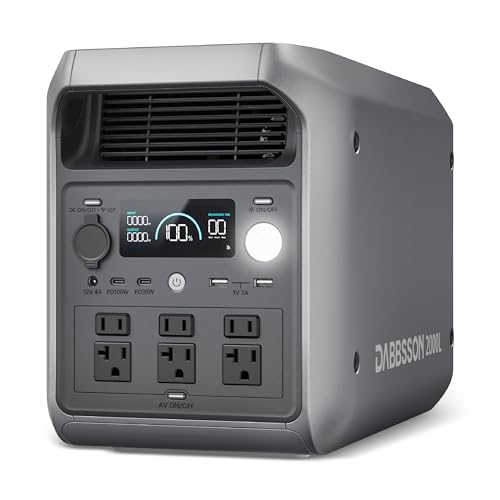
Roughly 2 kWh of storage with AC output. The nearest thing to a home battery you can buy off a shelf, and the usual answer to keeping a fridge and a few circuits alive in an outage.
DABBSSON Portable Power Station 2000L, 2048Wh Semi-Solid LiFePO4 Battery, 2200W AC Output...
Check price on Amazon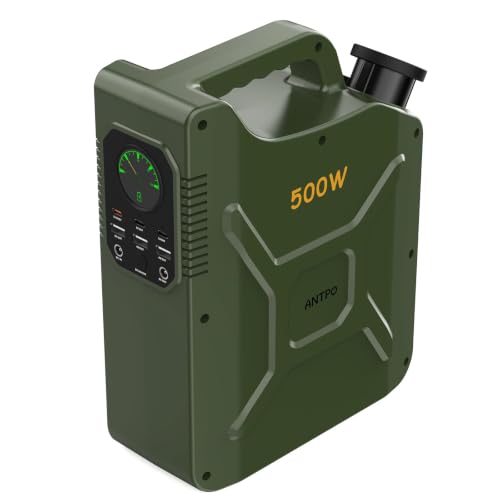
Around 500 Wh. Enough for phones, laptops, lights and a CPAP overnight. The size most people actually end up using.
ANTPO 500W Portable Power Station, 500Wh LiFePO4 Solar Generator Pure Sine Wave 110V AC...
Check price on Amazon
100 to 200 W, folds flat, pairs with a power station. This is what recharges the box above when the grid is down for more than a day.
DOKIO 200W Portable Foldable Solar Panel Kit for 12V Battery Charging
Check price on AmazonEach card links to the exact listing on Amazon, where the current price is shown. As an Amazon Associate we earn from qualifying purchases: if you buy through one of these links we earn a commission at no extra cost to you, and it does not change what is listed here or any figure elsewhere on this site.
Questions worth asking the installer
- How much of the house does it actually back up, and which circuits? Whole-home backup costs considerably more than a critical-loads panel.
- What is the usable capacity, not the nameplate? They are not the same number.
- What does the warranty guarantee at year ten, in kilowatt-hours retained rather than in percentages?
- Does my utility pay retail for exports? If yes, the financial case for storage is weak and the case is resilience.
- What does the battery add to the quote, itemised separately from the solar?